

Article
How Brokers Are Leveraging Highway in a Volatile Freight Market
.png)
Freight markets are becoming increasingly volatile as capacity tightens, rates shift quickly, cargo theft rises, and insurance carriers scrutinize claims more aggressively. While freight still needs to move at speed, that same speed is now creating new exposure, especially as fraud and financial risk extend beyond traditional control points.
For years, brokers have focused on onboarding as the primary line of defense, but the reality is that risk today develops throughout the lifecycle of the load. Identities can change after booking, equipment may not match what was promised, communications can be compromised, and insurance assumptions can break down, all while the shipment is in motion. To operate safely in this environment, brokers must move beyond static vetting and adopt continuous protection that enforces trust, validates identity, and confirms coverage from tender through delivery and payment.
This is where Highway’s platform works as a unified system.
From Onboarding to Continuous Protection
Most brokers are familiar with Highway’s ability to vet carriers at onboarding, but the more critical challenge begins after a carrier is assigned. Once a load is tendered, risk does not disappear; instead, it evolves in ways that are often difficult to detect without ongoing monitoring.
Load Lock was built to address this gap by continuously evaluating every shipment from tender through pickup and transit. Rather than relying on a one-time decision at booking, brokers gain real-time visibility into emerging risk signals while there is still time to act. These signals include identity alerts triggered mid-load, carriers overbooking beyond their observed capacity, VINs that are too far from pickup to realistically make an appointment, and the introduction of spoofed emails or fraudulent phone numbers.
These are not edge cases, but rather the most common patterns tied to modern cargo theft, and identifying them early is often the difference between preventing a loss and reacting to one.
Securing the Rate Confirmation
One of the most vulnerable moments in the shipment lifecycle occurs immediately after booking, when rate confirmations are traditionally sent via email. In today’s environment, compromised carrier inboxes have become a leading fraud vector, allowing bad actors to access legitimate communications and intercept load details without needing to impersonate anyone.
Secure Rate Confirmation Delivery eliminates this risk by removing sensitive load information from email entirely and delivering it through Highway’s platform instead. Carriers must authenticate using multi-factor verification to access the rate confirmation, ensuring that only verified users can retrieve load details. Brokers also gain full visibility into who accessed the information, when it was accessed, and from where, closing a critical gap between booking and pickup that has historically been difficult to control.
Verifying the Physical Execution of the Load
Even with strong identity controls in place, another key risk remains: whether the correct vehicle is actually moving the shipment.
Load Lock+ addresses this by incorporating ELD-based validation directly into the workflow, allowing brokers to confirm that the assigned VIN is active, insured, connected, and progressing as expected. If a vehicle is dormant, disconnected, or deviates from its expected route, alerts are generated immediately. This ensures that the physical execution of the load aligns with the digital record, which is often where fraud becomes most apparent.
Insurance Risk in a Hardening Market
At the same time, the insurance landscape is changing rapidly. Premiums are increasing, underwriting standards are tightening, and claims are being reviewed more rigorously, with denials becoming more common when exclusions apply.
A certificate of insurance may confirm that coverage exists, but it does not indicate what is excluded, and those exclusions are often where the greatest financial exposure lies. As freight moves across new lanes and brokers onboard carriers more quickly, assumptions about coverage can become increasingly risky.
Exclusion Intel addresses this by analyzing full cargo policies, including declarations and endorsements, to identify commodity and territorial exclusions before a load is assigned. This includes high-risk categories such as electronics, refrigerated goods, pharmaceuticals, alcohol, and cross-border freight, as well as region-specific exposures like California lanes. When combined with Load Lock, brokers are alerted if a carrier’s policy conflicts with a live shipment, enabling them to take action before uncovered freight is moved.
Strengthening the Network with Trusted Freight Exchange
Risk is not limited to individual shipments; it also exists within the broader network of participants involved in each transaction.
Trusted Freight Exchange (TFX) ensures that both carriers and brokers meet strict compliance standards before engaging in a transaction. Carriers are identity verified, ELD connected, and cargo policies are fully validated, while brokers are financially vetted through Triumph. Matching is driven by compliance rather than convenience, and secure digital payments reduce transaction risk while improving cash flow.
By strengthening the integrity of the network itself, TFX reduces the likelihood of risk entering the process at the sourcing stage.
A Unified Approach to Fraud and Risk
Each component of Highway’s platform addresses a specific point of vulnerability, but their true value is realized when they are used together as a continuous system of protection.
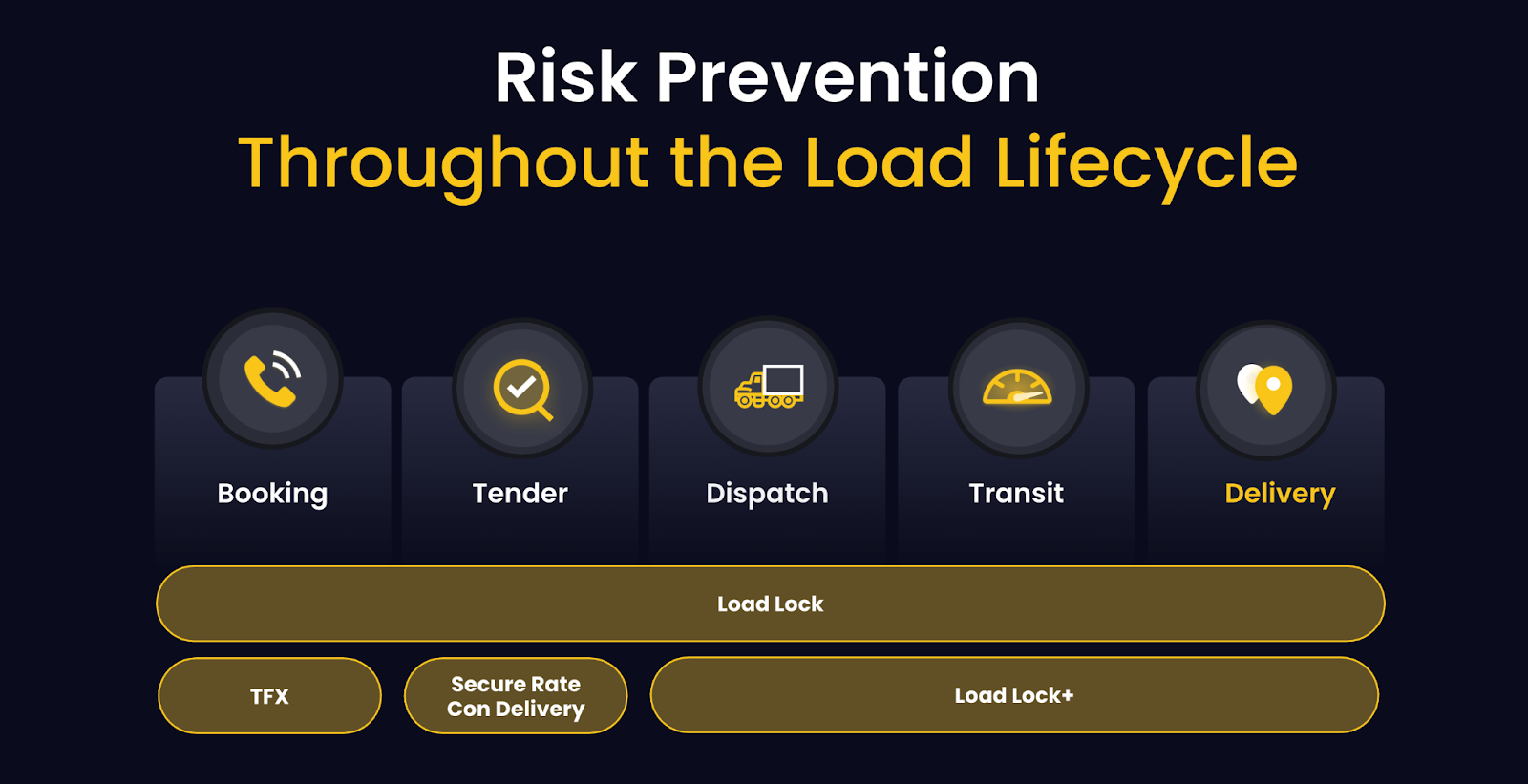
- Trusted Freight Exchange ensures that only verified and compliant participants enter the network
- Connect enables identity-first carrier onboarding and vetting
- Exclusion Intel confirms that coverage aligns with the shipment before assignment
- Secure Rate Con Delivery protects the transaction at booking against compromised inboxes
- Load Lock monitors identity and behavior through pickup
- Load Lock+ validates the physical movement of the shipment
This creates a continuous chain of trust that extends across the entire lifecycle of the load, rather than relying on isolated checkpoints. Risk happens during gaps in coverage, specifically if brokers are leveraging multiple tools to monitor the lifecycle of the load.
The Path Forward
In a volatile freight market, speed remains essential, but it must be matched by equally responsive risk controls. Fraud is becoming more sophisticated, insurance is less forgiving, and margins leave little room for error. As a result, brokers can no longer rely on partial solutions or assumptions about trust.
There has never been a more important time to ensure that every shipment is protected from rate confirmation through final delivery and payment.